Mostrar mensagens com a etiqueta Natureza. Mostrar todas as mensagens

segunda-feira, abril 11, 2011

Madame I.


Há uns valentes anos atrás só o som do seu nome fazia-me sorrir. Hoje fiquei a saber que afinal ainda é assim {sort of}.


Photo A de Jean-Baptiste Huynh.
Photo B de Paolo Roversi.

quinta-feira, março 10, 2011

Pré-HJ {02}


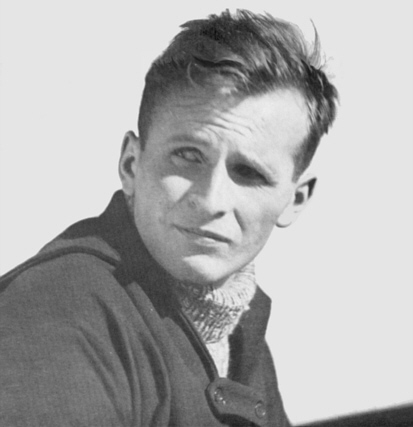
«Among the leaders of the pre–1933 German youth movements there was one who became a legend in his own lifetime. Eberhard Köbel—better known as “Tusk”— was born in Stuttgart in 1907, the son of a senior government official. Köbel joined a Wandervogel group as a boy, then became a member of the Freischar and leader of the Wurttemberg region of that group in 1928. In 1929, Tusk founded his own movement known as DJ 1–11 (Deutsche Jungenschaft—German Youth Movement of November 1). He revolutionized the youth press, radically changing newspapers’ layout, making them simpler, livelier and more attractive by using catchy illustrations and photographs. He introduced a new form of tent (the kohte from Lapland) which became very popular throughout the youth movement. The eccentric Tusk also introduced the banjo and balalaika; new songs and dancing styles were imported from Northern Europe. There was fanaticism and even ecstasy apparent in his speech and behavior. He was a visionary who thought in terms of a community for life, with all-embracing demands upon the individuals. Finding even the Prussian tradition too mild, Tusk introduced extreme ilitaristic practices and held up the ideal of the ancient Japanese warrior caste known as samurai. His dream was to forge German youth into one great army of followers whowere to become models of intrepidity, an elite of radiant physique and character, free from all bonds. Tusk’s Jungenschaft was a school of character. It became popular other groups envied his boys’ verve and élan, and often imitated their innovations, including attire and songs. He also met with jealousy and derision, and many rival leaders ridiculed his artificial pathos and tendency to swank. Tusk was a German nationalist but not an extreme one. As all right-wing leaders, he denounced the iniquities of the Treaty of Versailles, and attacked democrats, Marxists and Jews, but he never gave intelligible purpose to his feverish activities. His attitude in 1933 was more and more inconsistent. For a while he joined the Communist Party, and displayed much interest in Zen Buddhism. He advised members of his Deutsche Jungenschaft 1–11 to join Hitler’s youth and try to gain positions of command in order to subvert the Hitler Jugend from within. It seemed that Tusk nursed illusions of being appointed head of the Hitler Jugend. This was unthinkable and in January 1934 he was arrested by the Gestapo. Released in June 1934, he left Germany for Sweden and England where he stayed until the end of World War II, making a living as photographer and studying Far Eastern languages. In August 1944, Tusk, trying to make up for his own past political mistakes, expressed the hope that his former followers would fight as partisans against Hitler in the final phase of the war. The charismatic, legendary and eccentric Eberhard “Tusk” Köbel—regarded as both a genius and a charlatan—died in East Berlin in 1955, a sick, lonely and forgotten man.»

Trecho retirado de Hitler Youth, 1922-1945, Jean-Denis G. G. Lepage, MacFarland and Company, 2009. {Na fotografia, Eberhard Koebel}

Pré-HJ {01}


«The Bund der Artamenen (Artaman League) was another youth group that influenced the future HJ. The name came from the ancient Indo-German word “Artam” that was supposed to mean “revival through forces of the origin.” The Bund der Artamenen was a tiny organization of young ultranationalists created in the early 1920s by a young man by the name of August Georg Kenstler. Participants were devoted to the concept of soil and to the idea of German race. The idealist members of the back-tothe-land league wished to escape decadent and corrupt urban life through farming. They preferred to work on farms in lieu of military service. The Artamans were strongly chauvinist, anti–Slav and urged that Polishfarmers living in Germany be returned to their own country. Sympathizing with the Nazis, they had a flag displaying a swastika and a motto: “We want to march to the East!” Their device was “Blood, Soil and the Sword”—a slogan which was to become a basic principle of the SS. Many Artamans journeyed to farms in eastern Germany to defend the fatherland against the Slavs. The movement intended to mobilize hundreds of thousands of young Germans, but never succeeded in enlisting more than 2,000. It was not a success because the leaders quarreled, and also the idealism of these young people from the cities appeared insufficient to pass the severe test of agricultural labor. It was easier to rhapsodize about blood and soil than to buckle down to a working day of ten hours. The Artamans were also preoccupied with occultism and mysticism; they held that by communing with the ghostly spirits present in nature, mysterious veils of the past would be lifted. Their rituals tried to recreate that primordial kinship with nature which they supposed ancient Germans to have had. They abhorred science and reason as enemies of the life of the soul. Many of them became vegetarians and teetotalers, a few observed abstinence from sex, as they believed that the purification of the physical body would help the soul to see “reality.” They threw over orthodox medicine for spiritual and herbal healing, which were somehow felt to be closer to the primal source. They were thus open to the theory of the Nazi “philosopher” Richard Walther Darré (1895–1953), who preached selective breeding, the agrarian philosophy of Blut und Bodem (blood and soil) and the protection of the peasantry as the “life source of the Nordic race.” More and more the movement took on the character of an anti–Semitic society seeing the Jews as the exemplar of the bourgeoisie, and the urban bourgeoisie as the source of all misery. As the situation deteriorated in the late 1920s, some of the Artamans were drawn deeper into politics, and engaged in a holy war against their enemies: liberals, democrats, Free-Masons and Jews. Eventually many members of the Artaman League turned to National Socialism. Among the Artaman leaders in 1924 were two men destined to infamy in the Third Reich: Heinrich Himmler, who would later become Reichsführer SS, and Rudolf Hoess, later the commander of extermination camp Auschwitz. The small league was dismantled and incorporated into the Hitler Jugend in October 1934 as the Nazi youth movement gained strength.»

Trecho retirado de Hitler Youth, 1922-1945, Jean-Denis G. G. Lepage, MacFarland and Company, 2009. {Na fotografia, Wolfram Sievers}

sexta-feira, fevereiro 11, 2011

Tahrir Square?


{Via}

sábado, novembro 20, 2010

Atenção, pais com filhos que não participam na alta cimeira...

Hoje, às 15:00, há Nicholas Ray na Cinemateca Júnior. Wind Across the Everglades {1958}, «penúltimo filme de Nicholas Ray em Hollywood, antes da aventura das “produções expatriadas” na Europa, que dariam cabo da sua carreira, WIND ACROSS THE EVERGLADES também é um filme ecologista “avant la lettre”. A acção passa-se nos começos do século XX e mostra a luta de um professor contra os caçadores furtivos que dizimavam certas espécies de aves, cujas penas eram usadas em chapéus de luxo. Fabulosa utilização dos cenários naturais dos pântanos e cursos de água».

quarta-feira, novembro 03, 2010

Lovely...


{via}

sábado, junho 19, 2010

Pequeno interlúdio {o futebol já volta...}

Há 11 anos atrás, quando a Matilde dava os seus primeiros passos na vida, lembro-me de que ficava entusiasmado com o exercício de a imaginar a crescer enquanto dormia. Por vezes, estava na sala, já noite, ela a dormir na cama dela, e eu a imaginar todo aquele corpinho em ebulição, os pulmões a inalarem a cada passada cada vez mais um pouquinho de ar, os ossos a esticar, a massa encefálica a acender e a apagar feita uma árvore de natal, o cabelo a ganhar curvas novas, os olhinhos a palpitar ao ritmo cardíaco, tudo aquilo era uma força da natureza em constante e inteligente desabrochanço. Era {e continua a ser} uma imagem entusiasmante.
Agora, 11 anos volvidos, já não é a Matilde que explode é a Júlia. Mas a Júlia, o meu ternurento kleine panzer, não espera pela noite para deixar a natureza expressar-se. A Júlia explode, cresce, desenvolve, desabrocha, ramifica, irradia, salpica, ali, mesmo em frente a mim, de olhos esbugalhados, de dedo em riste, boca aberta, tudo a vibrar. Em constante movimento. A Matilde vivia o dia-a-dia e guardava a noite para crescer. A Júlia cresce enquanto vive o dia-a-dia, ou o dia-a-dia dela é crescer, não sei bem, e guarda a noite para descansar...