domingo, março 13, 2011

Das duas, uma...

Muito sinceramente, custa-me bastante assistir ao contentamento de muita da malta que foi ontem à passeata na Avenida. Muitos dos que foram são meus amigos e conhecidos. Muitos são pessoas que tenho em conta e estima. Que sei serem inteligentes. Que conheço há já uns tempos. Que têm mundo. Como é possível entenderem que foi um sucesso? Como é possível virem a terreiro afirmar que estava compacta, que vibrava {como se isso fosse difícil de conseguir}, que hoje será um dia diferente, que não é mais possível assobiar para o lado? Como?!

O que eu vi foi 200 mil pessoas a descerem a Avenida, ventilando descontentamentos vários {na boa, é para isso mesmo que a Avenida serve}, naquela cadência típica da Avenida, e, por fim, desaguarem nos Restauradores e ficarem entregues àquelas 3 alminhas! Meu Deus! Acho que foi um andar para trás muito lamentável. Não há muito tempo atrás, quando o pessoal descia a Avenida sabia que no fim estavam lá os profissionais. Eram os do costume, ok, eram os da cassete, os dos sindicatos, os desalinhados, os combatentes, os resistentes, whatever, mas eram os profissionais da coisa. Agora, desceram, berraram e ficaram ali encostados a um palanque improvisado com 3 alminhas que não sabiam bem o que fazer, o que dizer. À rasca.

Só vejo uma conclusão: ou o descontentamento não era assim tão grande, ou o contentam-se com pouco.

sexta-feira, março 11, 2011

Eu não vou, porque eu já lá estou!

Faço minhas algumas das palavras do João Nuno Martins...

«Mas esta mudança que eu desejo nunca acontecerá se não soubermos e estivermos absolutamente convictos do que queremos. E acima de tudo não se fará se não tivermos consciência de que temos que ser nós os primeiros a mudar. Cada um de nós. Na sua casa. No seu condomínio. No seu emprego. Na sua cidade. Na sua Rua. No seu grupo de amigos. No seu íntimo. Na sua mentalidade.»

O texto do homem é longo, e nem sempre concordo com tom da coisa, mas a ideia geral aproxima-se em muito da minha. Sobretudo esta ideia primordial, a deste parágrafo, em que ele coloca a tónica em nós próprios. Sempre achei isto, sempre me pautei por estas linhas, e é nas minhas acções e nos meus passos que me concentro, diariamente. E nunca esperei que governo algum me viesse dizer como é que é ou não é. Nunca esperei respostas e soluções de governo algum. Porque se o fizesse, mais cedo ou mais tarde, estaria na rua a berrar contra ele. Não me iria restar alternativa. Só que isso não é vida, muito menos o suficiente para eu ir à Avenida. Um dia, e esse dia é o próximo dia 12, vai a Avenida estar cheia de gente que, estando o programa em aberto, são A4s em branco, não vai ter outra alternativa senão estar contra alguém {leia-se Sócrates}, este ou aquele {leiam-se os administradores das empresas públicas... e privadas}, aquilo {o PS} ou aqueloutro {o PSD}. E eu gostaria era de ver a Avenida cheia de gente que está a favor de si e do outro. Nesse dia eu vou estar lá.

quinta-feira, março 10, 2011

Pré-HJ {02}


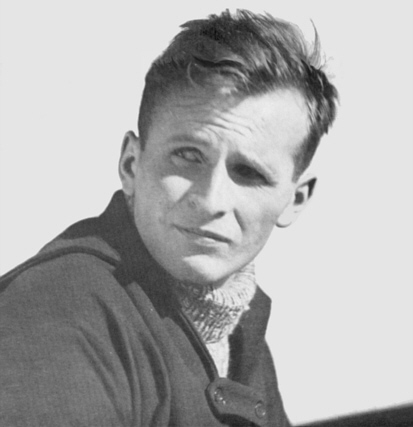
«Among the leaders of the pre–1933 German youth movements there was one who became a legend in his own lifetime. Eberhard Köbel—better known as “Tusk”— was born in Stuttgart in 1907, the son of a senior government official. Köbel joined a Wandervogel group as a boy, then became a member of the Freischar and leader of the Wurttemberg region of that group in 1928. In 1929, Tusk founded his own movement known as DJ 1–11 (Deutsche Jungenschaft—German Youth Movement of November 1). He revolutionized the youth press, radically changing newspapers’ layout, making them simpler, livelier and more attractive by using catchy illustrations and photographs. He introduced a new form of tent (the kohte from Lapland) which became very popular throughout the youth movement. The eccentric Tusk also introduced the banjo and balalaika; new songs and dancing styles were imported from Northern Europe. There was fanaticism and even ecstasy apparent in his speech and behavior. He was a visionary who thought in terms of a community for life, with all-embracing demands upon the individuals. Finding even the Prussian tradition too mild, Tusk introduced extreme ilitaristic practices and held up the ideal of the ancient Japanese warrior caste known as samurai. His dream was to forge German youth into one great army of followers whowere to become models of intrepidity, an elite of radiant physique and character, free from all bonds. Tusk’s Jungenschaft was a school of character. It became popular other groups envied his boys’ verve and élan, and often imitated their innovations, including attire and songs. He also met with jealousy and derision, and many rival leaders ridiculed his artificial pathos and tendency to swank. Tusk was a German nationalist but not an extreme one. As all right-wing leaders, he denounced the iniquities of the Treaty of Versailles, and attacked democrats, Marxists and Jews, but he never gave intelligible purpose to his feverish activities. His attitude in 1933 was more and more inconsistent. For a while he joined the Communist Party, and displayed much interest in Zen Buddhism. He advised members of his Deutsche Jungenschaft 1–11 to join Hitler’s youth and try to gain positions of command in order to subvert the Hitler Jugend from within. It seemed that Tusk nursed illusions of being appointed head of the Hitler Jugend. This was unthinkable and in January 1934 he was arrested by the Gestapo. Released in June 1934, he left Germany for Sweden and England where he stayed until the end of World War II, making a living as photographer and studying Far Eastern languages. In August 1944, Tusk, trying to make up for his own past political mistakes, expressed the hope that his former followers would fight as partisans against Hitler in the final phase of the war. The charismatic, legendary and eccentric Eberhard “Tusk” Köbel—regarded as both a genius and a charlatan—died in East Berlin in 1955, a sick, lonely and forgotten man.»

Trecho retirado de Hitler Youth, 1922-1945, Jean-Denis G. G. Lepage, MacFarland and Company, 2009. {Na fotografia, Eberhard Koebel}

Pré-HJ {01}


«The Bund der Artamenen (Artaman League) was another youth group that influenced the future HJ. The name came from the ancient Indo-German word “Artam” that was supposed to mean “revival through forces of the origin.” The Bund der Artamenen was a tiny organization of young ultranationalists created in the early 1920s by a young man by the name of August Georg Kenstler. Participants were devoted to the concept of soil and to the idea of German race. The idealist members of the back-tothe-land league wished to escape decadent and corrupt urban life through farming. They preferred to work on farms in lieu of military service. The Artamans were strongly chauvinist, anti–Slav and urged that Polishfarmers living in Germany be returned to their own country. Sympathizing with the Nazis, they had a flag displaying a swastika and a motto: “We want to march to the East!” Their device was “Blood, Soil and the Sword”—a slogan which was to become a basic principle of the SS. Many Artamans journeyed to farms in eastern Germany to defend the fatherland against the Slavs. The movement intended to mobilize hundreds of thousands of young Germans, but never succeeded in enlisting more than 2,000. It was not a success because the leaders quarreled, and also the idealism of these young people from the cities appeared insufficient to pass the severe test of agricultural labor. It was easier to rhapsodize about blood and soil than to buckle down to a working day of ten hours. The Artamans were also preoccupied with occultism and mysticism; they held that by communing with the ghostly spirits present in nature, mysterious veils of the past would be lifted. Their rituals tried to recreate that primordial kinship with nature which they supposed ancient Germans to have had. They abhorred science and reason as enemies of the life of the soul. Many of them became vegetarians and teetotalers, a few observed abstinence from sex, as they believed that the purification of the physical body would help the soul to see “reality.” They threw over orthodox medicine for spiritual and herbal healing, which were somehow felt to be closer to the primal source. They were thus open to the theory of the Nazi “philosopher” Richard Walther Darré (1895–1953), who preached selective breeding, the agrarian philosophy of Blut und Bodem (blood and soil) and the protection of the peasantry as the “life source of the Nordic race.” More and more the movement took on the character of an anti–Semitic society seeing the Jews as the exemplar of the bourgeoisie, and the urban bourgeoisie as the source of all misery. As the situation deteriorated in the late 1920s, some of the Artamans were drawn deeper into politics, and engaged in a holy war against their enemies: liberals, democrats, Free-Masons and Jews. Eventually many members of the Artaman League turned to National Socialism. Among the Artaman leaders in 1924 were two men destined to infamy in the Third Reich: Heinrich Himmler, who would later become Reichsführer SS, and Rudolf Hoess, later the commander of extermination camp Auschwitz. The small league was dismantled and incorporated into the Hitler Jugend in October 1934 as the Nazi youth movement gained strength.»

Trecho retirado de Hitler Youth, 1922-1945, Jean-Denis G. G. Lepage, MacFarland and Company, 2009. {Na fotografia, Wolfram Sievers}

segunda-feira, fevereiro 28, 2011

De Cosme a Coentrão...

... estamos todos, mas todos mesmo, de Parabéns!


Desde 1904...


Campeonato de Lisboa
Vencedor 1909/10, 1911/12, 1912/13, 1913/14, 1915/16, 1916/17, 1917/18, 1919/20, 1932/33, 1939/40

Taça de Honra
Vencedor
1919/20, 1921/22, 1962/63, 1964/65, 1966/67, 1967/68, 1968/69, 1971/72, 1972/73, 1973/74, 1974/75, 1977/78, 1978/79, 1979/80, 1981/82, 1983/84, 1985/86, 1987/88

Taça "Ribeiro dos Reis"
Vencedor
1963/64, 1965/66, 1970/71

Campeonato de Portugal
Vencedor
1929/30 - 1930/31 - 1934/35

Campeonato Português
Vencedor (32)
1935/36, 1936/37, 1937/38, 1941/42, 1942/43, 1944/45, 1949/50, 1954/55, 1956/57, 1959/60, 1960/61, 1962/63, 1963/64, 1964/65, 1966/67, 1967/68, 1968/69, 1970/71, 1971/72, 1972/73, 1974/75, 1975/76, 1976/77, 1980/81, 1982/83, 1983/84, 1986/87, 1988/89, 1990/91, 1993/94, 2004/05, 2009/10

Segundo lugar
1943/44, 1945/46, 1946/47, 1947/48, 1948/49, 1951/52, 1952/53, 1958/59, 1965/66, 1969/70, 1973/74, 1977/78, 1978/79, 1981/82, 1985/86, 1987/88, 1989/90, 1991/92, 1992/93, 1995/96, 1997/98, 2002/03, 2003/04

Terceiro Lugar
1934/35, 1938/39, 1950/51, 1953/54, 1957/58, 1961/62, 1979/80, 1984/85, 1994/95, 1996/97, 1998/99, 1999/00, 2005/06, 2006/07, 2008/09

Taça de Portugal
Vencedor (24)
1939/40, 1942/43, 1943/44, 1948/49, 1950/51, 1951/52, 1952/53, 1954/55, 1956/57, 1958/59, 1961/62, 1963/64, 1968/69, 1969/70, 1971/72, 1979/80, 1980/81, 1982/83, 1984/85, 1985/86, 1986/87, 1992/93, 1995/96, 2003/04

Finalista Vencido
1937/38, 1938/39, 1957/58, 1964/65, 1970/71, 1973/74, 1974/75, 1988/89, 1996/97, 2004/05

Supertaça de Portugal
Vencedor
1979/80, 1984/85, 1988/89, 2004/05

Finalista Vencido
1980/1981; 1982/1983; 1983/1984; 1985/1986; 1986/1987; 1990/1991; 1992/1993; 1993/1994; 1995/1996; 2003/2004, 2009/2010

Taça da Liga
Vencedor
2008/09, 2009/10

Taça dos Clubes Campeões Europeus/Liga dos Campeões da UEFA
Vencedor
1960/61, 1961/62

Finalista vencido
1962/63, 1964/65, 1967/68, 1987/88, 1989/90

Taça UEFA/Liga Europa
Finalista vencido
1982/83

Taça Latina
Vencedor
1949/50

Finalista vencido
1956/57

Taça Intercontinental
Finalista vencido
1961/62, 1962/1963


... até ontem à noite, no último segundo de um jogo eléctrico.

domingo, fevereiro 27, 2011

Fracção de segundo...


«Mas o que é que eu fiz? Foi agora mesmo, não foi? Sim. Dominei, olhei, rematei {com o direito!}, entrou no canto... Is this for real?! Merda, estão 55 mil aos saltos. Este senhores estão a ajudar-me a desembaraçar-me de uma porção deles que, doidos, vieram por ali abaixo e me envolveram, qual vagalhão vermelho... aquela bandeira negra de Sesimbra já desceu, já amainou? Medo... Não se calam. Não nos calam. Foda-se, caralho. Marquei. Ainda a 8 pontos... Mas campeões, nós {ainda} somos campeões! O que faço com isto? Jesus! E eles escorregam? Têm de... Isto merece. Hoje isto foi demoníaco, foi de outras esferas. Quem faz este jogo, merece ser campeão! Ou quem É campeão faz jogos destes? Amanhã compro a Bola, o Record e o Jogo! Anda cá Salvio... onde anda o Luísão? Quero abraçar alguém...»

quinta-feira, fevereiro 24, 2011

sábado, fevereiro 19, 2011

Fenómeno

Quando é que uma pessoa {por exemplo} passa a acreditar que 5 milhões {por exemplo} de dólares {por exemplo} já não chegam e começa a perseguir 10, 15, 50, 250 milhões? Esse momento interessa-me deveras. Devia ser estudado, filmado, romanceado, etnografado.

Fenômeno?


Ainda vou a tempo de falar do Fenômeno? Ainda posso? Pois aqui vai. Um tipo, que ao regressar à pátria para pendurar as chuteiras, para terminar uma carreira gloriosa {sim, apesar de tudo, gloriosa}, um tipo que é do Mengão desde o berço e escolhe acabar os seus dias no Timão por mais uns tostes, um tipo assim não me emociona. Não merece grande respeito. Pronto, já está.

sábado, fevereiro 12, 2011

Imagens para os dias que se seguem...

Não nos iludamos, acabaram-se os tempos do povo é sereno. Na Argélia, caso a rua siga em frente com os seus propósitos esperam-nos imagens e mortes de outro calibre. Estes tipos por estas bandas sempre foram mais fumiflamantes*.


Frames retirados do filme de Gillo Pontecorvo, A Batalha de Argel {1966}.


* Que lança fumo e chamas. {Nem de propósito a palavra do dia no dicionário Priberam... O raio da palavra é linda, não é?}

The next eye of the hurricane?


{36.76154,3.056871}

sexta-feira, fevereiro 11, 2011

Tahrir Square?


{Via}

Liberdade {está quase, quase...}


Mesmo que daqui a 30 anos estejam endividados até ao tutano porque lhes disseram que tinham de ter as casas mobiladas no IKEA, porque era mais barato quando não era, que se lixe! Este dia, a liberdade e a sua conquista, valem a pena. Sempre!

sexta-feira, fevereiro 04, 2011

I keep on dreaming...

Logo mais à noitinha, na Tahrir Square...


Play it loud, for crying out loud!